Key takeaways
- Ten actives: three B vitamins, four plant extracts, one amino acid and two naturally occurring compounds paired with caffeine.
- Yes, it contains caffeine — from green coffee bean, which is why the routine is a morning one.
- 60 capsules per bottle, two capsules a day, so one bottle is a 30-day supply.
- Manufactured in the United States and labelled as a dietary supplement, not a medicine.
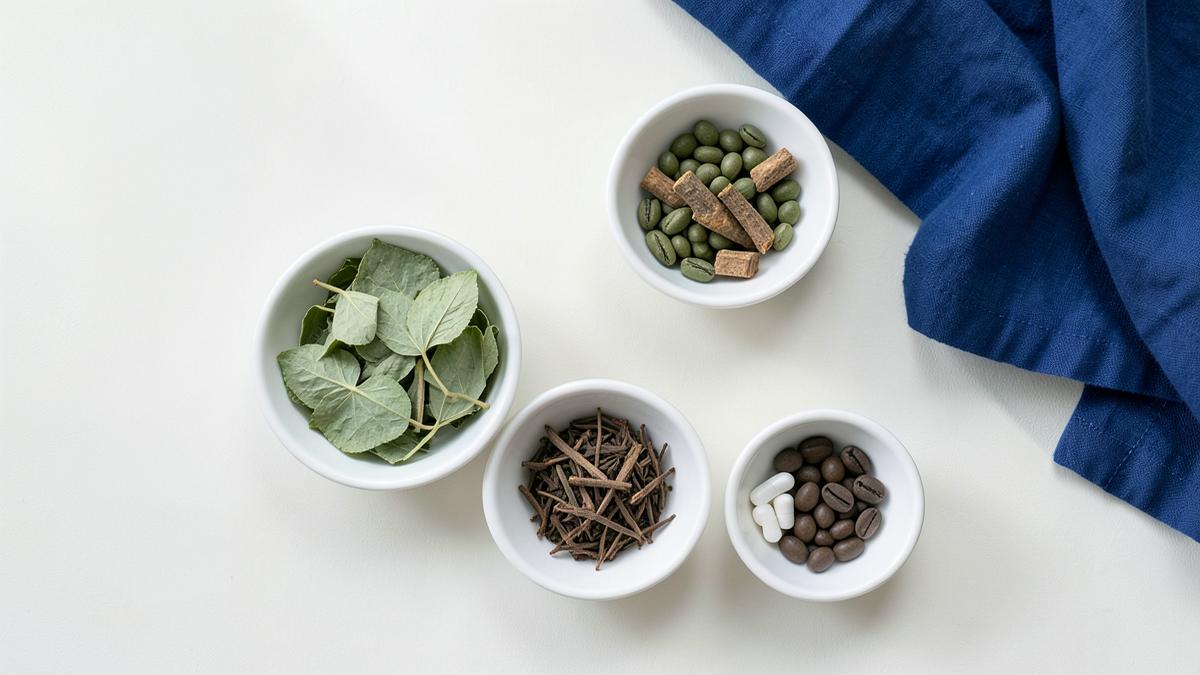
The label at a glance
FocusMax is a single daily formula rather than a stack of separate pills. The table below is the quickest way to see what type each ingredient is and the plain reason it is on the label. Exact amounts per serving are printed on the supplement facts panel on the bottle you receive.
| Ingredient | Type | Why it is on the label |
|---|---|---|
| Bacopa monnieri | Herbal extract | The best-known botanical for everyday memory and learning support |
| Huperzia serrata | Herbal extract | Natural source of huperzine A, linked to everyday acetylcholine chemistry |
| L-tyrosine | Amino acid | Used by the body to make neurotransmitters involved in attention |
| Rhodiola rosea | Adaptogen | Traditionally used for a sense of everyday mental stamina |
| Green coffee bean caffeine | Plant caffeine | Alertness, from a plant source rather than synthetic caffeine |
| Theacrine | Plant compound | Paired with caffeine for a smoother, steadier feel |
| Theobromine | Plant compound | The gentler cousin of caffeine, found in cocoa |
| Vitamin B1 (thiamine) | Vitamin | Normal energy-yielding metabolism in the nervous system |
| Vitamin B6 | Vitamin | Normal psychological function and nervous system function |
| Vitamin B12 | Vitamin | Normal neurological function and reduction of tiredness and fatigue |
Read the bottle, not just this page
We describe what is on the label honestly, but the printed supplement facts panel on your bottle is always the authoritative source for amounts and any allergen statement. Take it with you if you are checking anything with your doctor or pharmacist.
Serving size, capsules and how long a bottle lasts
Each bottle holds 60 capsules. The routine is two capsules in the morning with a glass of water, so a bottle is a 30-day supply. That is why the packages are sold as a 60-day, 90-day or 180-day supply rather than as loose bottles.
Consistency matters more than timing here. Botanicals like bacopa are traditionally taken daily over weeks, not swallowed on the mornings you feel foggy, so the packages are sized to make a fair run realistic.
- Two capsules, once a day, in the morning.
- 60 capsules per bottle = 30 days per bottle.
- Taken with water, with or shortly after food if capsules unsettle you.
- No cycling schedule required — steady daily use is the intended pattern.
The memory side of the formula
Two ingredients carry the memory and recall side of the label. Bacopa monnieri is a creeping herb used for centuries in Ayurvedic practice and is the most widely discussed botanical in the everyday-memory category. It is a slow ingredient: traditional use and the nutrition literature both treat it as something taken daily over weeks.
Huperzia serrata is a club moss, and the reason it appears in memory formulas is huperzine A, a compound studied in nutrition research for its role in everyday acetylcholine chemistry — the messenger system involved in learning and recall.
- Bacopa monnieri — the daily-use memory botanical, not a same-day ingredient.
- Huperzia serrata — the natural source of huperzine A on this label.
The attention and drive side
L-tyrosine is an amino acid your body uses as raw material for dopamine and noradrenaline, the neurotransmitters most associated with attention and motivation. It is a common inclusion in focus formulas for exactly that reason.
Rhodiola rosea is an adaptogen from cold northern climates, traditionally used for a sense of mental stamina through a long, demanding day rather than for a sharp lift.
- L-tyrosine — raw material for attention-related neurotransmitters.
- Rhodiola rosea — traditional support for everyday mental stamina.
Does FocusMax contain caffeine? Yes — here is the honest answer
FocusMax contains caffeine from green coffee bean, so it is not a caffeine-free formula. That is deliberate: caffeine is the one ingredient in this category whose effect on alertness is genuinely well established, and pairing it with theacrine and theobromine is a common way to aim for a steadier feel than coffee alone gives.
Practically, this means one thing: take it in the morning. Taking it late in the day risks disturbed sleep, and poor sleep undoes anything a supplement might do for focus. If you are caffeine-sensitive, already drink several coffees a day, or have been told to limit caffeine, treat FocusMax as part of your daily caffeine total and speak to your doctor first.
If you want to avoid caffeine entirely
FocusMax is not the right product for you, and we would rather say so. Our guide to focus supplements without caffeine explains what to look for on a caffeine-free label instead.
The B vitamins, and why a focus formula includes them
B1, B6 and B12 are not exotic, and that is the point. They are the nutritional foundation the nervous system runs on, and shortfalls are more common than people assume — particularly B12 in older adults and in people eating little or no meat.
Vitamin B1 contributes to normal energy-yielding metabolism, B6 to normal psychological and nervous system function, and B12 to normal neurological function and the reduction of tiredness and fatigue. These are nutritional statements about what the vitamins do in the body, not claims about treating anything.
What is not in FocusMax
Just as useful as the ingredient list is what the label does not carry. FocusMax is a dietary supplement, so it contains no prescription drug ingredients, and there is no proprietary-blend trick where the actives are hidden behind a single unnamed total — every ingredient is named.
Nothing on this page is a claim to treat, cure or prevent any condition, and we do not publish invented studies, ratings or customer reviews to make the label look stronger than it is.
Who should check with a doctor first
Because FocusMax contains caffeine and several botanical extracts, some people should have a short conversation with a healthcare professional before starting — and take the ingredient list with them.
- If you are pregnant or nursing, or under 18.
- If you are sensitive to caffeine or have been asked to limit it.
- If you take prescription medication of any kind, including blood pressure, thyroid, antidepressant or blood-thinning medication.
- If you are managing a diagnosed health condition, or scheduled for surgery.
- New, sudden or worsening memory problems always deserve a medical assessment rather than a supplement.
FocusMax packages and prices
All prices are in US dollars. Every package is a one-time payment — there is no subscription and nothing rebills.
| Package | Supply | Price | Per bottle | Shipping |
|---|---|---|---|---|
| 2 Bottles | 60 days | $158 | $79 | $20 |
| 3 Bottles | 90 days | $198 | $66 | Free |
| 6 Bottles | 180 days | $294 | $49 | Free |
Common questions
Does FocusMax contain caffeine, and how much?
Yes — caffeine from green coffee bean, alongside theacrine and theobromine. The exact amount per serving is printed on the supplement facts panel on your bottle. Take it in the morning and count it towards your daily caffeine, especially if you also drink coffee.
Is there anything in it I could be allergic to?
The full ingredient list is printed on every bottle, including any allergen statement the manufacturer provides. If you have a known allergy, read the printed panel before your first serving and check with your pharmacist if anything is unclear.
Can I take FocusMax with my medication?
Ask your doctor or pharmacist first. Botanical extracts and caffeine can interact with some medicines, so the safe answer is to show them the ingredient list rather than guess.
How many capsules are in a bottle and how long does it last?
Sixty capsules per bottle. At two capsules a day, that is a 30-day supply, which is why the packages are sold as a 60-day, 90-day or 180-day supply.
When should I take the two capsules?
In the morning, with a glass of water. The formula contains caffeine, so taking it later in the day can affect your sleep.
Does the formula change between bottles?
The formula is the same across the packages we sell — the only difference between the 2, 3 and 6 bottle options is how many bottles you receive and the price per bottle. Always check the printed panel on your bottle, as it is the authoritative version of the label.
This guide is part of our ingredient guides series in the Learn hub. One page per ingredient in the FocusMax formula, in plain English.
These statements have not been evaluated by the Food and Drug Administration. FocusMax is a dietary supplement and is not intended to diagnose, treat, cure or prevent any disease. Talk to your doctor before starting any supplement, especially if you are pregnant, nursing, under 18 or taking medication.