Key takeaways
- New, rapid or worsening memory problems need a medical assessment — no supplement substitutes for that.
- Low B12 is a common and treatable contributor to memory complaints later in life, and it is a simple blood test.
- Several everyday medications affect memory; a pharmacist review is free and often overlooked.
- FocusMax is a dietary supplement for everyday memory support in generally healthy adults, not a treatment for any condition.
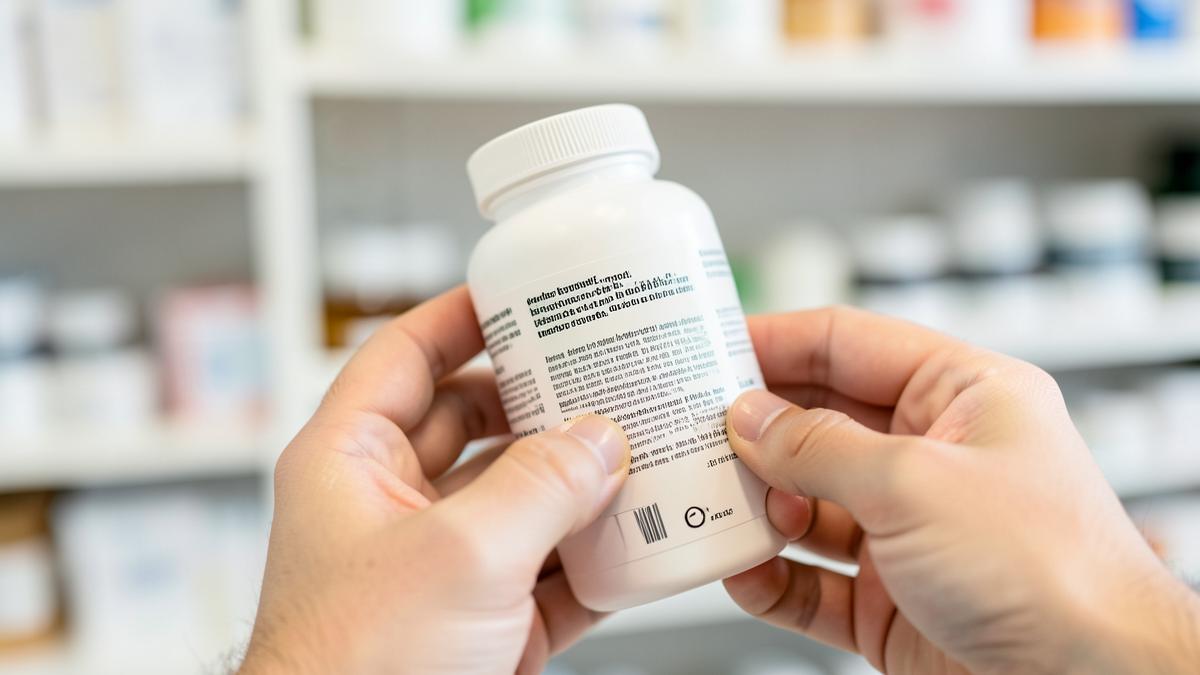
See a doctor first if any of these apply
These are not things to manage with a supplement. Many causes of memory change later in life are treatable — thyroid problems, B12 deficiency, medication side effects, depression, sleep apnoea — and finding them early matters. Assessment costs you a conversation.
- Memory problems that have appeared or worsened noticeably over months.
- Getting lost in familiar places, or trouble with everyday tasks you have done for years.
- Repeating the same question or story within a short space of time without realising.
- Word-finding difficulty severe enough that others comment on it.
- Changes in personality, mood or judgement alongside memory changes.
We will not sell against a doctor's visit
FocusMax is not intended to diagnose, treat, cure or prevent any disease, including dementia or Alzheimer's disease. If this page describes someone you are worried about, book the appointment.
Why B12 deserves particular attention after 60
The ability to absorb B12 from food commonly declines with age, and certain long-term medications reduce it further. B12 contributes to normal neurological function, and a shortfall can present as fog, low energy and poor concentration long before anything else.
This is one of the few genuinely testable things in the whole category. Ask for it as part of a routine blood panel rather than guessing — and if it is low, correcting it properly is more valuable than any formula.
Check your medications before you add anything
A pharmacist will review everything you take, including supplements, usually at no cost. It is the most underused safety check available.
- Blood thinners such as warfarin — several botanicals warrant caution; ask before adding any of them.
- Blood pressure and heart rhythm medication — caffeine content matters here, and FocusMax contains caffeine.
- Thyroid medication and antidepressants — timing and interactions are worth a pharmacist's review.
- Anticholinergic medications — a common and reversible contributor to fog in older adults; worth reviewing regardless of supplements.
Where a daily supplement reasonably fits
Once the medical picture is clear, a daily formula is a support routine rather than a treatment. FocusMax is designed around that: B1, B6 and B12 plus named botanicals traditionally used for everyday memory and clarity, taken as a steady morning habit.
FocusMax pairs B1, B6 and B12 with bacopa monnieri, huperzia serrata, L-tyrosine, rhodiola rosea and a gentle green-coffee caffeine paired with theacrine and theobromine. Sixty capsules per bottle, made in the USA, two capsules each morning.
| Ingredient | Why it is included |
|---|---|
| Vitamin B1 (thiamine) | Contributes to normal energy-yielding metabolism and nervous system function. |
| Vitamin B6 | Involved in normal psychological function and neurotransmitter metabolism. |
| Vitamin B12 | Supports normal neurological function; shortfalls commonly show up as fog and fatigue. |
| Bacopa monnieri | The best-known botanical in the everyday memory conversation; taken daily over weeks. |
| Huperzia serrata | Plant source of huperzine A, explored for its role in everyday acetylcholine chemistry. |
| L-tyrosine | An amino acid the body uses to make the neurotransmitters involved in attention. |
| Rhodiola rosea | An adaptogen traditionally used for a sense of mental stamina through a long day. |
| Green-coffee caffeine | A gentle, plant-sourced lift rather than a large synthetic dose. |
| Theacrine & theobromine | Paired with caffeine for a smoother, longer curve instead of a spike. |
Things that outperform any capsule
- Treating hearing loss — untreated hearing loss is strongly associated with cognitive decline, and hearing aids are one of the highest-value interventions available.
- Regular walking, most days, at a pace that makes conversation slightly harder.
- Social contact and mentally demanding hobbies, which are protective in a way no bottle is.
- Sleep quality, including screening for sleep apnoea if you snore heavily or wake unrefreshed.
- Blood pressure control, which matters for brain health as much as for the heart.
How to test it honestly on yourself
Subjective things are easy to talk yourself into and just as easy to talk yourself out of. A little structure fixes that.
- Write down three concrete markers before you start — for example: how often you lose the thread mid-sentence, how the 3pm stretch feels, how many times you re-read a paragraph.
- Take it at the same time every morning. Consistency matters far more than dose with botanicals.
- Change one thing at a time. Starting a supplement, a new sleep schedule and a new job in the same week tells you nothing.
- Give it a full 60 days before you judge it, and re-read your notes rather than trusting your memory of how week one felt.
- If the answer is no, use the 60-day money-back policy. That is exactly what it is there for.
Who should talk to a doctor first
FocusMax contains caffeine and several botanicals, so it is not right for everybody. Talk to your doctor before starting if you are pregnant or nursing, under 18, taking prescription medication — particularly for blood pressure, mood, thyroid or blood clotting — or managing any medical condition.
Memory or concentration problems that are new, rapid, or interfering with daily life are a reason to book an appointment rather than to order a supplement. Nothing on this page is medical advice, and FocusMax is not intended to diagnose, treat, cure or prevent any disease.
What ordering actually looks like
Packages are 2 bottles ($158 plus $20 shipping), 3 bottles ($198 with free US shipping) or 6 bottles ($294 with free US shipping) — a 60, 90 or 180 day supply at two capsules a day. Prices are in US dollars, every package is a one-time payment, and nothing rebills.
Checkout happens on this site with card details entered on an encrypted Stripe form, we ship to the United States and Canada, and every package is covered by the 60-day money-back policy. That window is deliberately longer than a single bottle so you can finish a fair trial and still change your mind.
FocusMax packages and prices
All prices are in US dollars. Every package is a one-time payment — there is no subscription and nothing rebills.
| Package | Supply | Price | Per bottle | Shipping |
|---|---|---|---|---|
| 2 Bottles | 60 days | $158 | $79 | $20 |
| 3 Bottles | 90 days | $198 | $66 | Free |
| 6 Bottles | 180 days | $294 | $49 | Free |
Common questions
Can a supplement reverse memory loss?
No. No dietary supplement can claim to reverse, treat or prevent memory loss or any related condition, and any product that says otherwise is making a claim it is not allowed to make. FocusMax supports everyday memory and clarity in generally healthy adults, nothing more.
Is FocusMax suitable for someone in their seventies or eighties?
It is a dietary supplement for adults, but at that age most people take at least one prescription medication, and FocusMax contains caffeine. Check with your doctor or pharmacist before starting — that is a genuine recommendation, not a formality.
What is the difference between normal forgetfulness and dementia?
Broadly, normal forgetfulness is occasional, stable over time and does not stop you managing daily life; dementia involves progressive decline that interferes with everyday function. Only a clinician can make that assessment, and doing it early opens more options.
Does FocusMax contain anything a doctor would want to know about?
Yes — take the label to your appointment. It contains B1, B6 and B12, bacopa monnieri, huperzia serrata, L-tyrosine, rhodiola rosea, and caffeine from green coffee bean with theacrine and theobromine.
How long should an older adult try it before deciding?
The same as anyone else: think in weeks, and use the full 60-day money-back window to decide, keeping notes rather than relying on recall.
This guide is part of our choosing a brain supplement series in the Learn hub. Buyer's guides for the goal you actually have — memory, focus, fog or energy.
These statements have not been evaluated by the Food and Drug Administration. FocusMax is a dietary supplement and is not intended to diagnose, treat, cure or prevent any disease. Talk to your doctor before starting any supplement, especially if you are pregnant, nursing, under 18 or taking medication.